MRI of the Pelvis, in plain English.
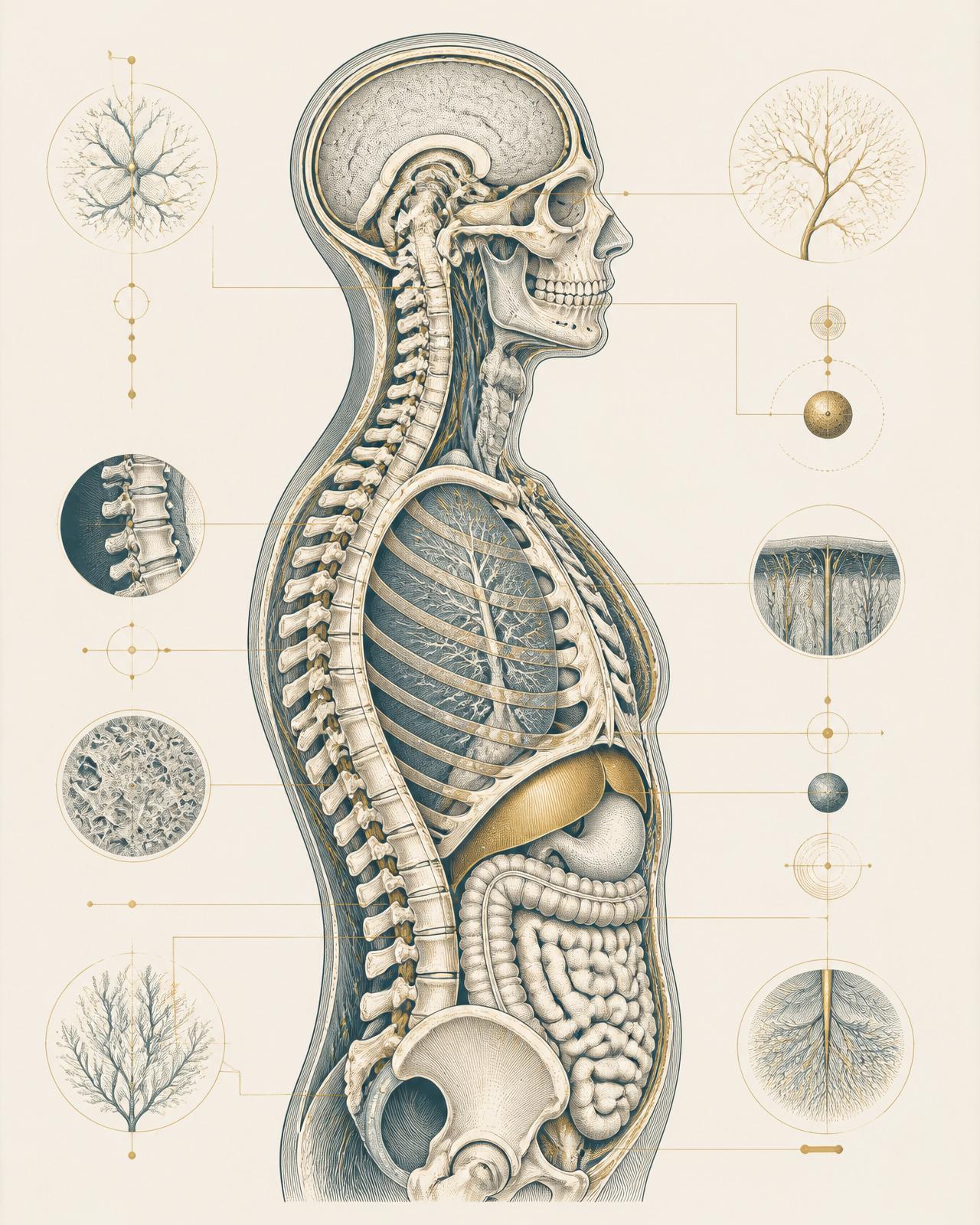
A pelvic MRI shows the organs inside your pelvis — the uterus, ovaries and bladder in women; the prostate, bladder and seminal vesicles in men — along with lymph nodes and muscles.
Why doctors order this scan
- Heavy or painful periods, or an unclear ultrasound
- Suspected fibroids, endometriosis or adenomyosis
- Raised PSA in men, or a prostate lesion on ultrasound
- Before pelvic surgery
What this MRI actually shows
- •Uterus and ovaries (women)
- •Prostate and seminal vesicles (men)
- •Urinary bladder
- •Pelvic lymph nodes and floor muscles
Common findings, decoded
These are the words you are most likely to see. They sound scarier than they usually are.
- Uterine fibroid
- A common non-cancerous muscle growth in the uterus.
- Adenomyosis
- The inner lining of the uterus has grown into its muscle wall.
- Simple ovarian cyst
- A fluid sac on the ovary. Most resolve on their own.
- PI-RADS score
- A prostate MRI grading system from 1 (very low suspicion) to 5 (high suspicion). Your urologist will interpret it.
Words that usually deserve a doctor conversation
If you see any of these on your report, it does not mean an emergency — but do not ignore them either. Book a follow-up.
How to prepare for the scan
- •Come with a moderately full bladder (as instructed)
- •Fasting may be needed if contrast is planned
- •Metal-free clothing
- •Scan takes 30-45 minutes
Questions worth asking your doctor
- 1Do these findings explain my symptoms?
- 2What are the treatment options — medicines, procedure, or surgery?
- 3How urgent is this?
- 4Do I need a biopsy or a repeat scan?
In an Indian context
Pelvic MRIs are commonly done for fibroids and adenomyosis in Indian women, and for prostate evaluation in men over 50 with a raised PSA.
Frequently asked questions
Are uterine fibroids on MRI serious?+
Fibroids are non-cancerous growths and are extremely common in Indian women in the 30-50 age group. Many need no treatment. Treatment is decided by size, location, and symptoms, not the MRI alone.
What does a PI-RADS score mean on a prostate MRI?+
PI-RADS is a 1-5 grading system for how suspicious a prostate MRI finding is. PI-RADS 1-2 is very low suspicion; PI-RADS 3 is indeterminate; PI-RADS 4-5 is more suspicious and usually leads to a targeted biopsy. Your urologist decides next steps.
How much does a pelvis MRI cost in India?+
A plain pelvic MRI in India typically costs ₹5,000-₹12,000. A dedicated multi-parametric prostate MRI is usually ₹8,000-₹15,000.
Have your pelvis mri report in hand?
Paste it, photograph it, or upload the PDF. Get a calm plain-English summary in your language in under a minute. Free. Nothing stored.
Decode my report nowOther MRI scans decoded
MRIdecoder is an educational tool. It does not diagnose or replace a qualified radiologist or physician. Always confirm findings and treatment with your doctor.